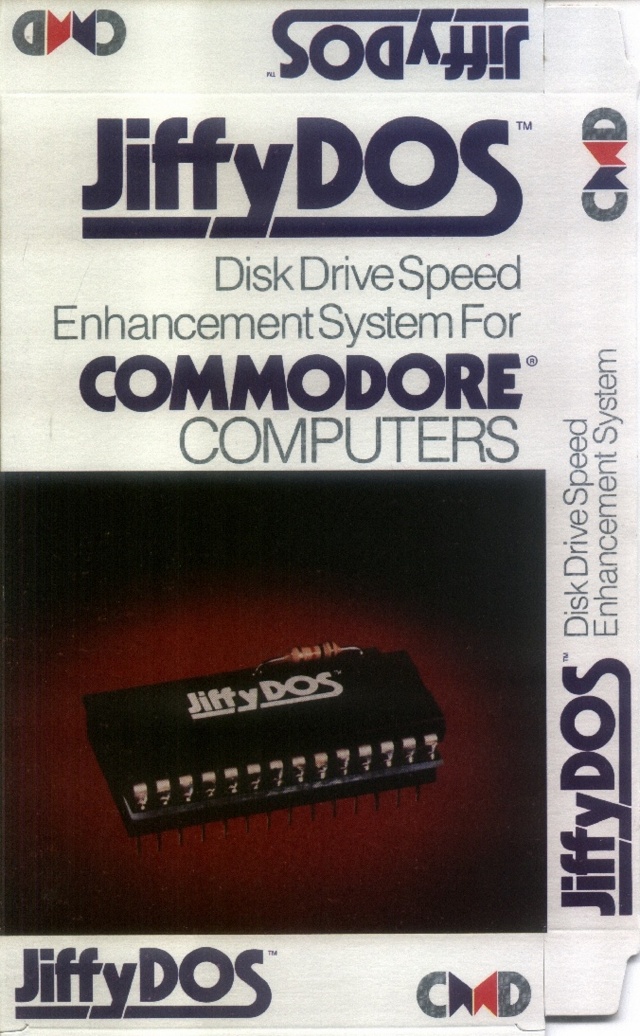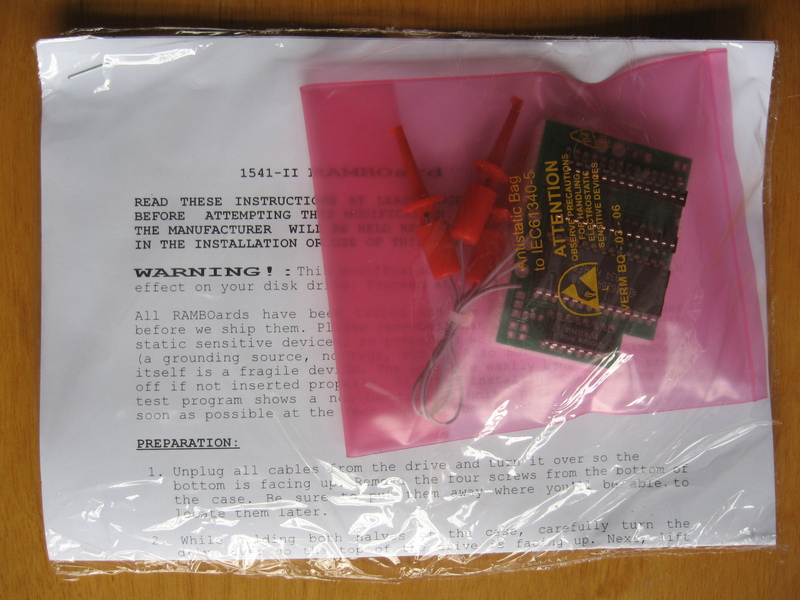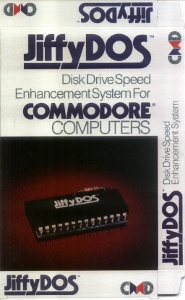
Prototype JiffyDOS shipping box, rejected as too expensive
(courtesy Craig Ernster)
JiffyDOS
JiffyDOS is an alternate communication protocol for Commodore
floppy drives that can speed up disk access by a factor of ten or
more. One replacement ROM is installed in the Commodore 64 itself,
while another ROM is installed in each disk drive. The CMD devices (FD
series 3 1/2" floppies, HD series hard drives, and even the
RAMLink) all had JiffyDOS built in, and many Commodore users consider
it de rigueur.
The saga of JiffyDOS is a strange one. Once manufactured by the
legendary Creative Micro Designs (CMD), its sale was later licensed to
a company whose repeated failure to fulfill orders earned its dishonor
in the Commodore community — and resulted in the product's
availability by other means. If you know who I mean and you've
been victimized by this situation,
go here
and take action. Make sure to mention that there have been other
complaints (I can provide my Complaint Identification Number if it
will help you).
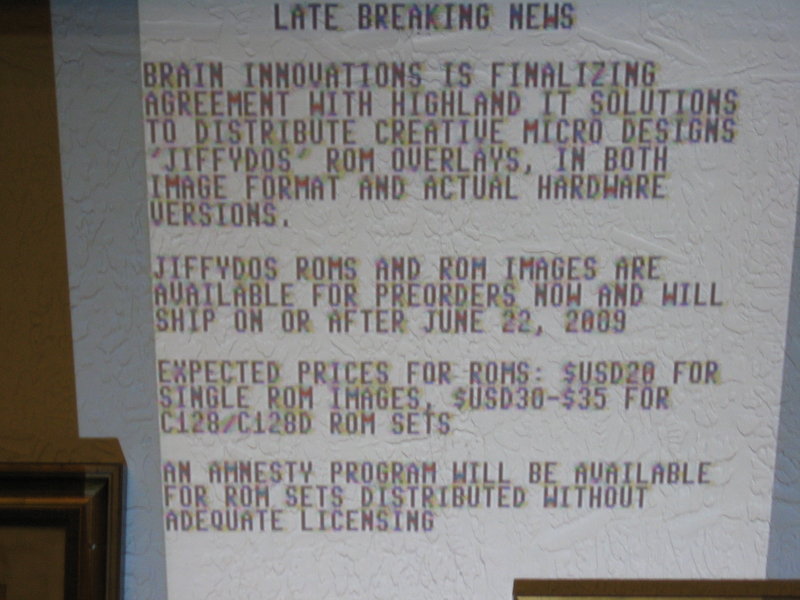
In May 2009, Jim Brain announced
(by projecting
the information onto a wall from a Commodore SX-64
at C=4 2009) that he had
entered into an agreement with Mark Fellows (formerly of CMD) to
become the second licensee of JiffyDOS (and possibly other of their
products). In October 2009, JiffyDOS became available in
an online store on Jim's site.
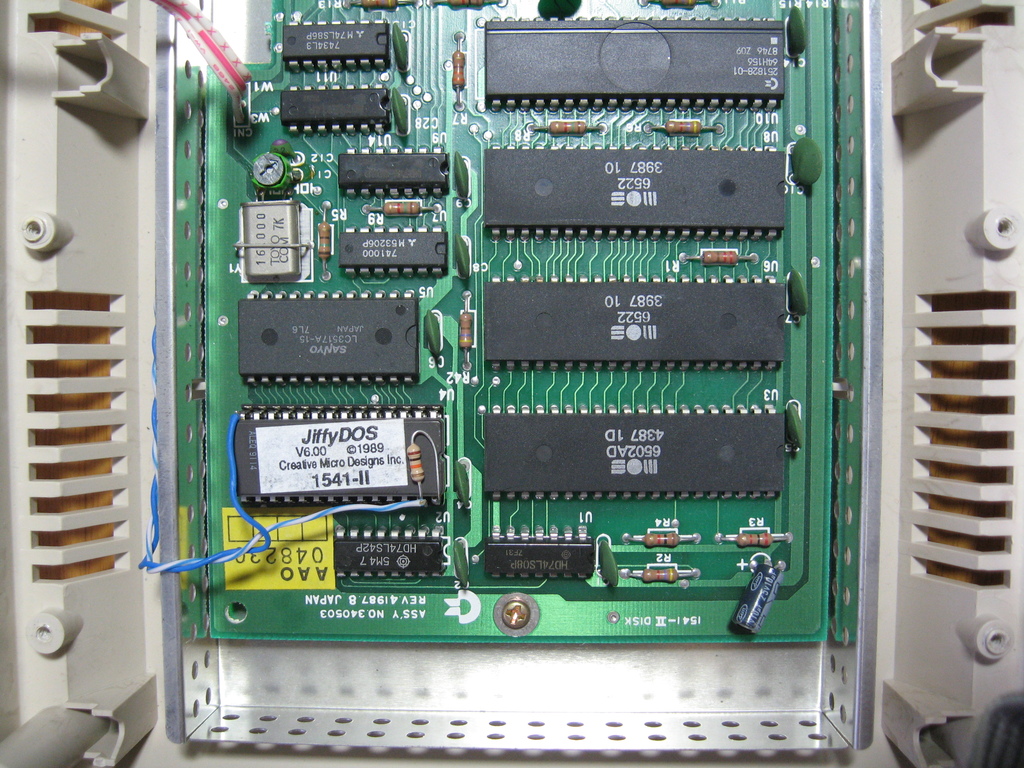
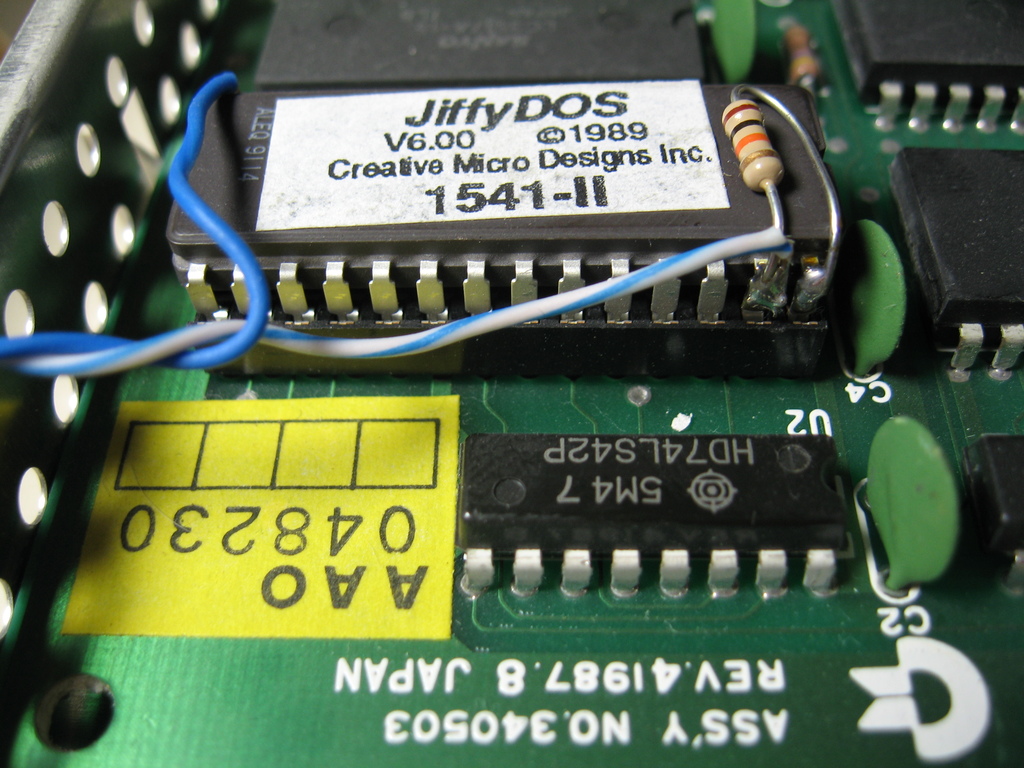
Here we see two photos of JiffyDOS installed in a 1541-II
5 1/4" floppy disk drive. The beauty of JiffyDOS is that you
can go back to the original ROMs with the flick of a switch (although
it's rarely necessary because of the high degree of backward
compatibility). The second picture shows this in detail: the wires
lead to a toggle switch (shipped with the ROMs), which is normally
installed by drilling a small hole in the back of the case.
|
Here is some more information on CMD:
an article (PDF format) on the timing
details of the SuperCPU and SuperRAM, excerpted from Commodore World
magazine, issue 19. a Q-Link post from 1992 that
gives some insight into CMD's attitude toward copyrights. Also note
where they say "I have stated before that JiffyDOS COULD be faster,
but we have avoided implementing it as such to maintain good hardware
and software compatibility".
the 2001 notice from CMD that they were
exiting the Commodore business
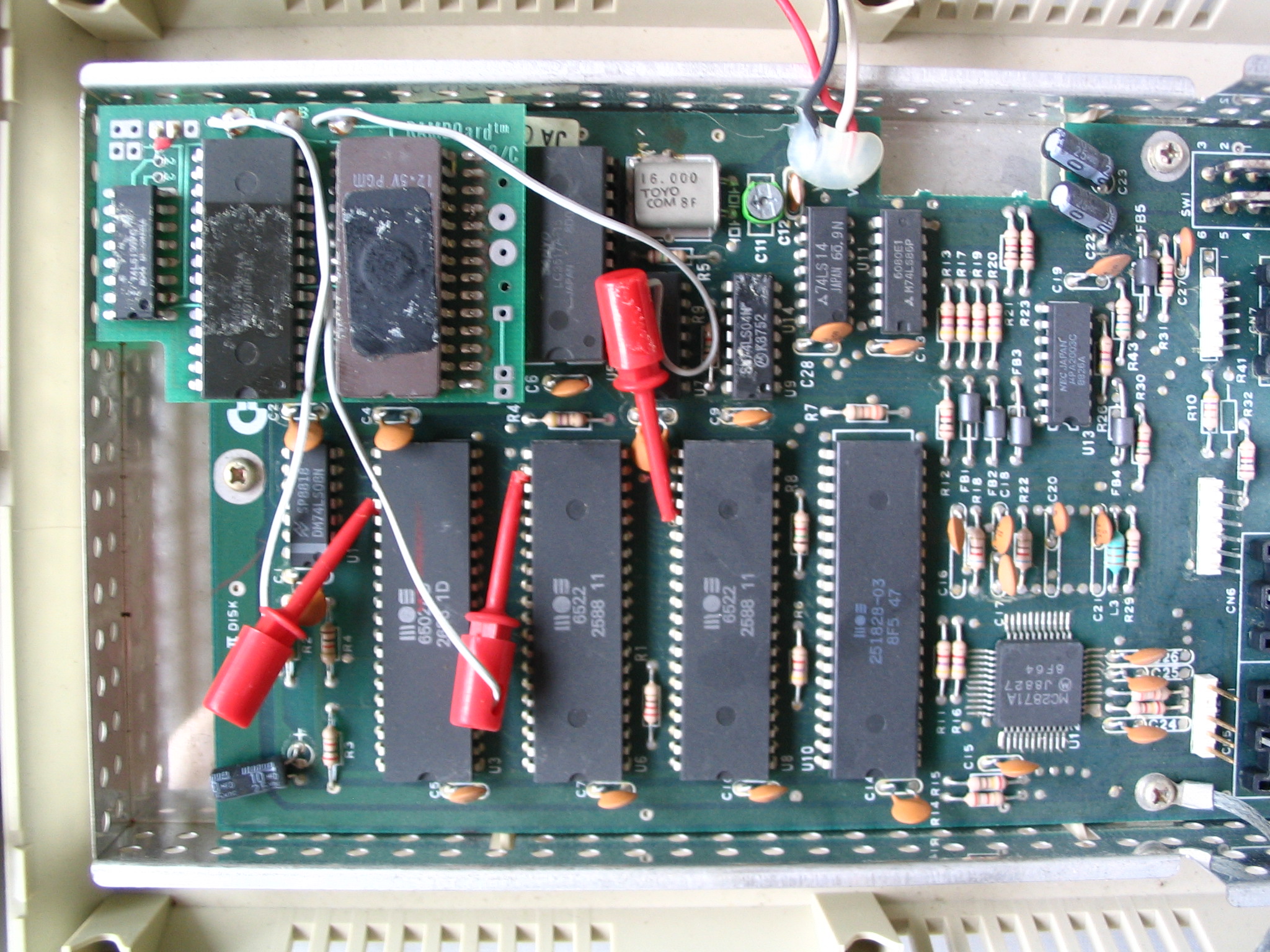
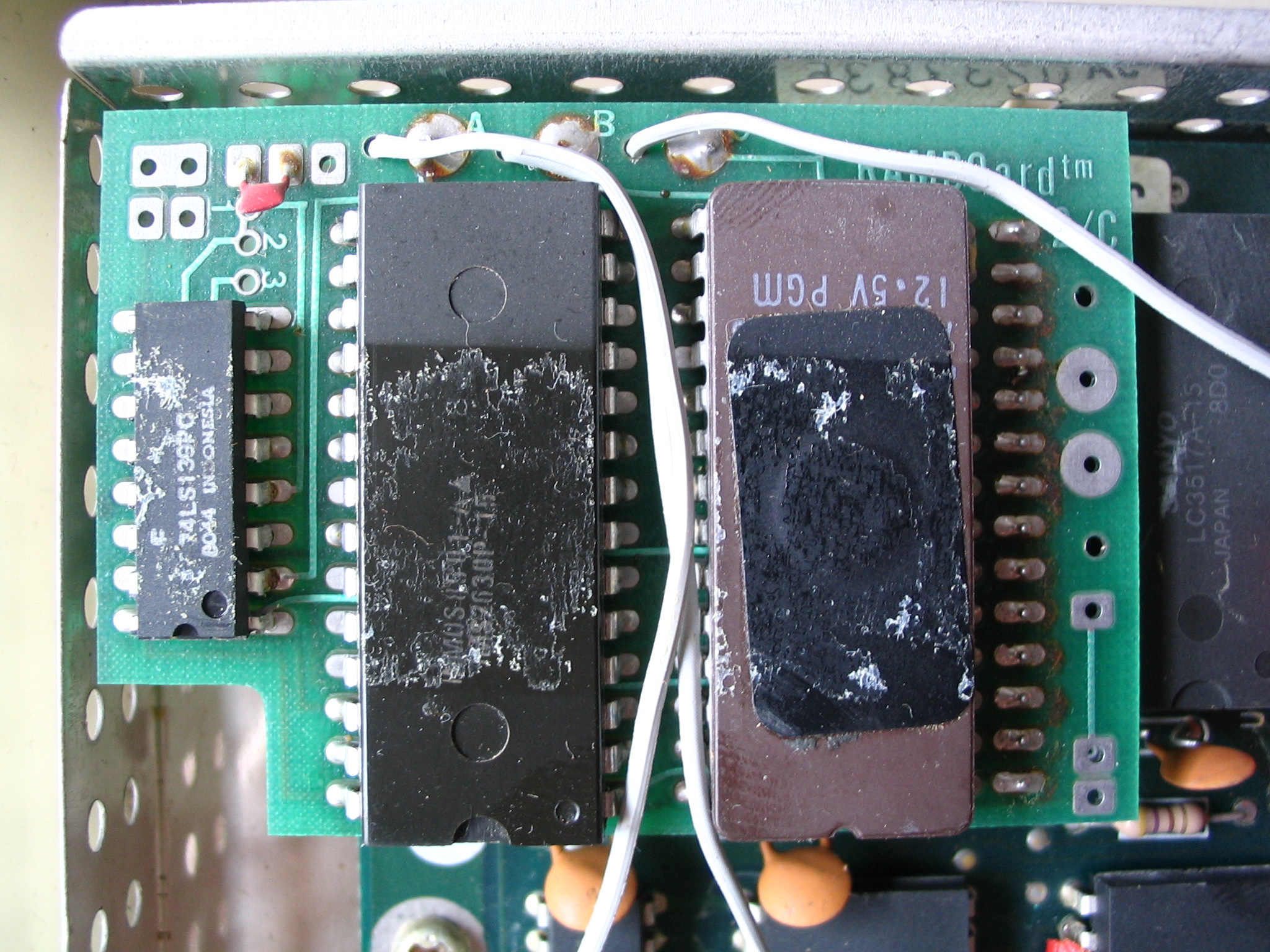
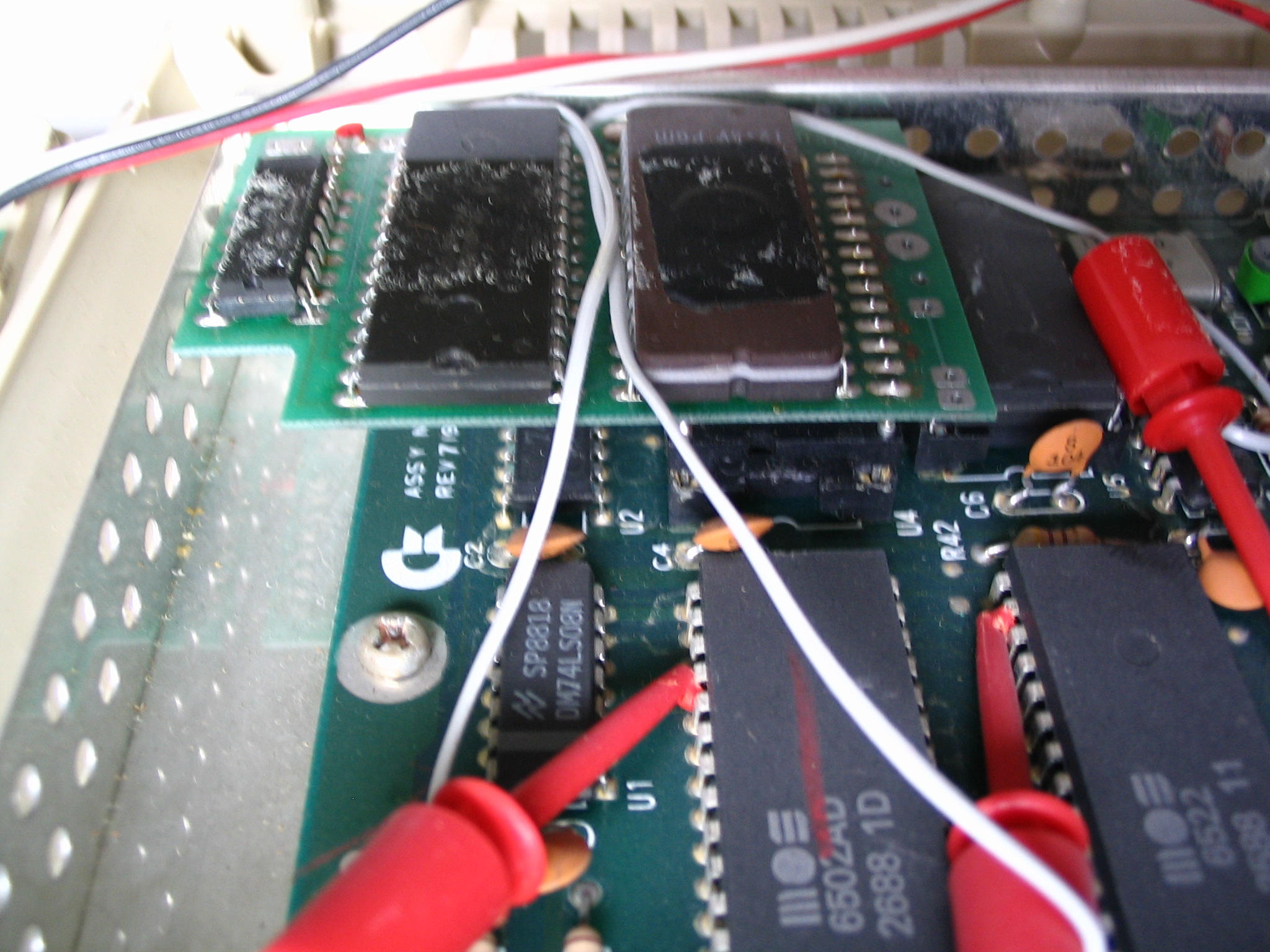
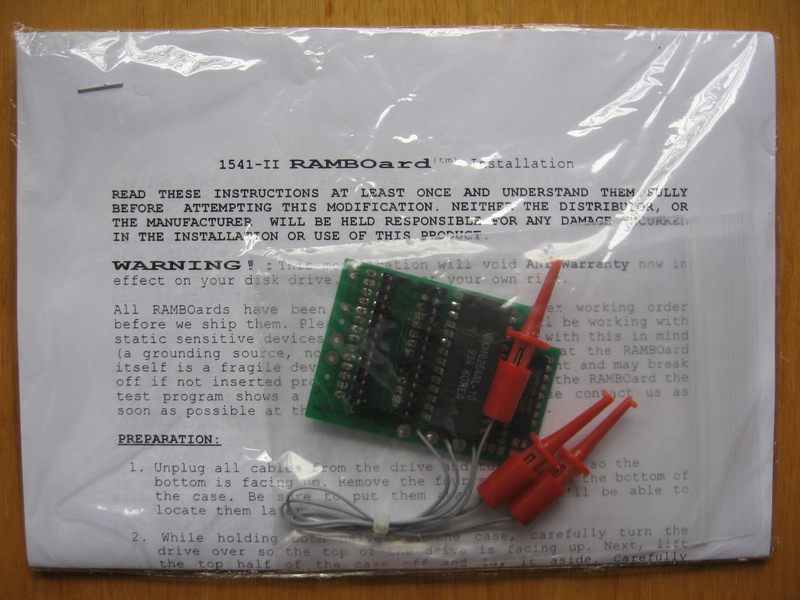
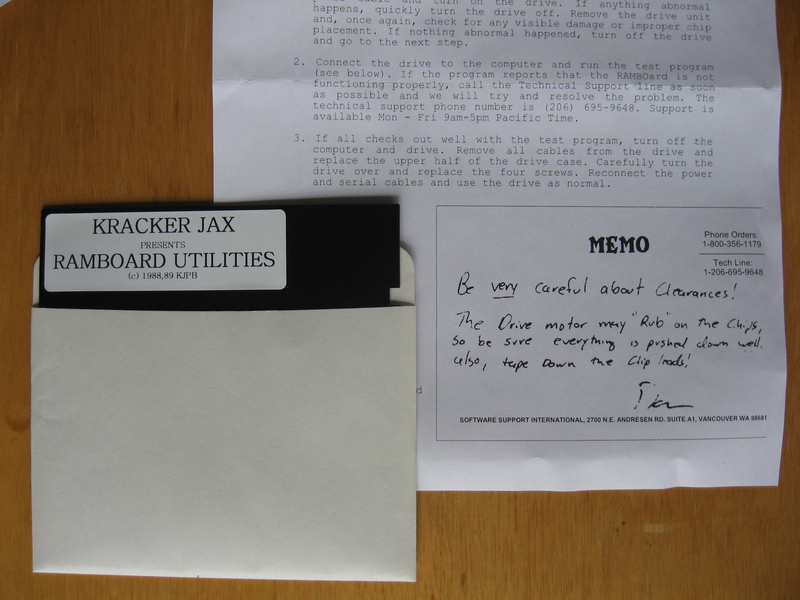
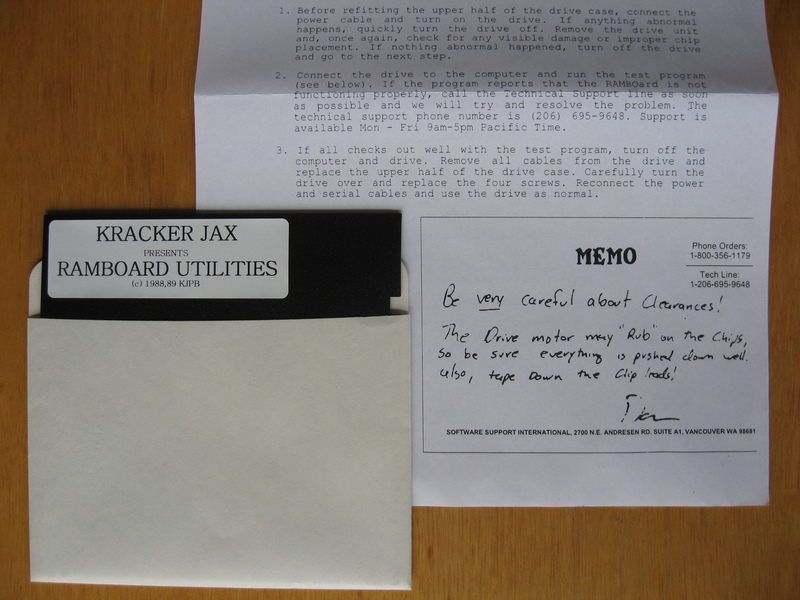
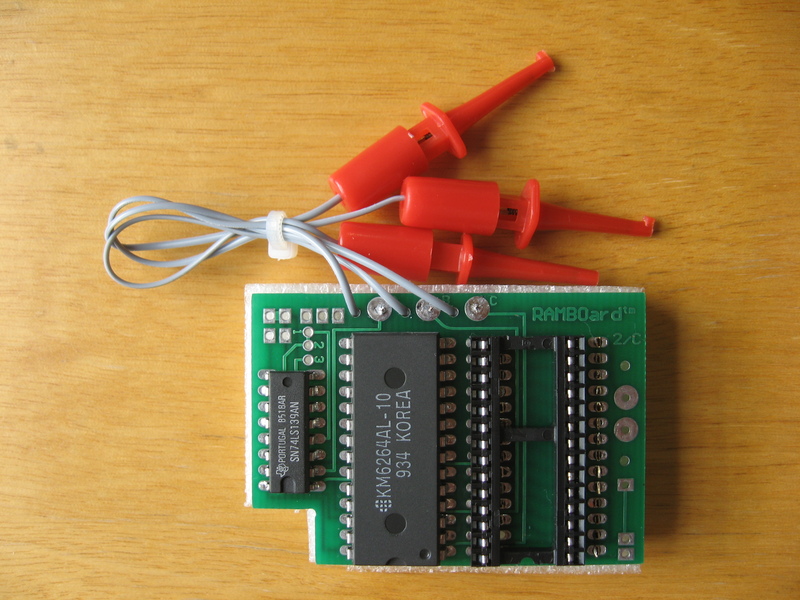
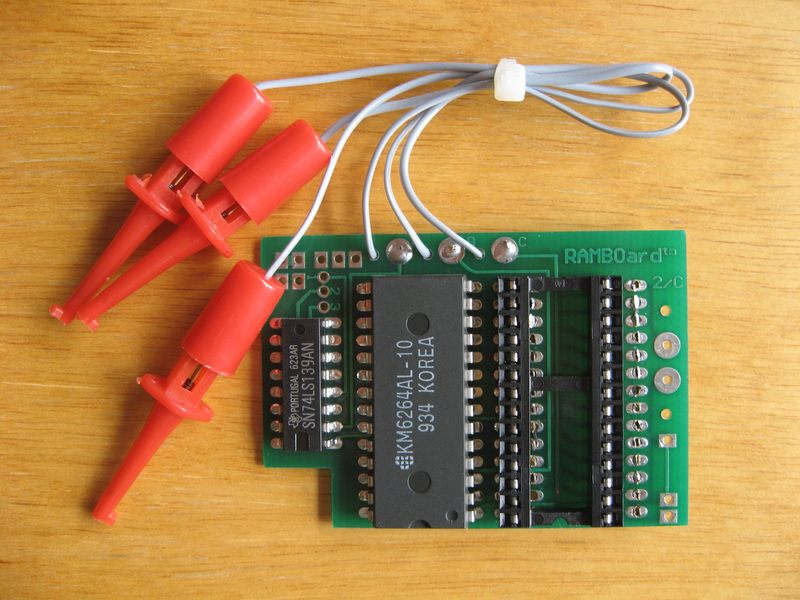
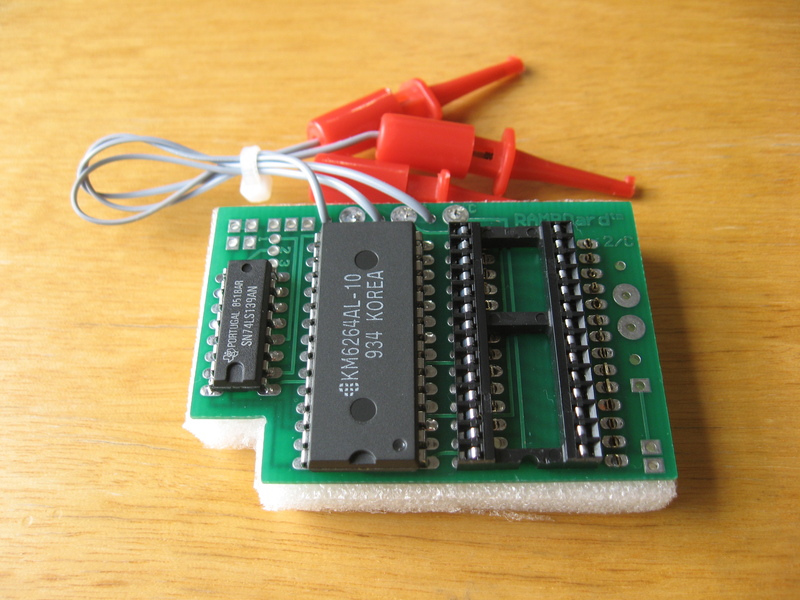
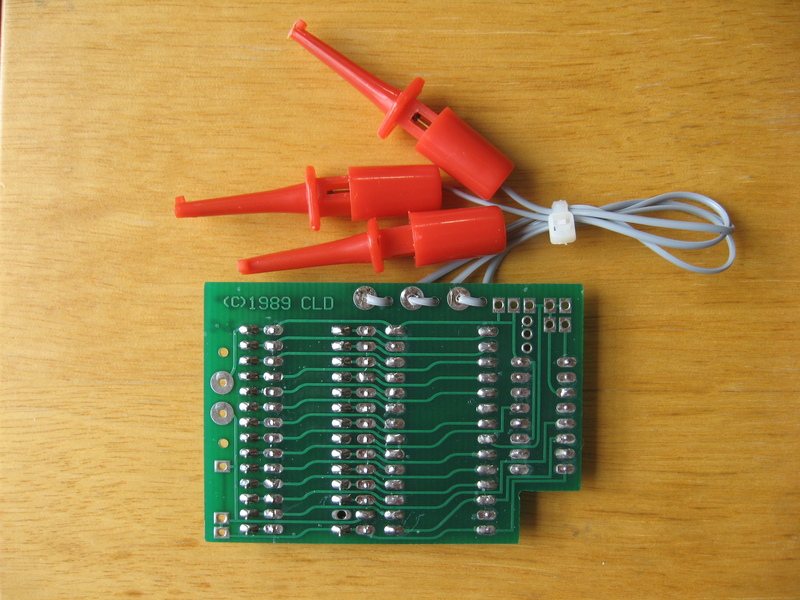
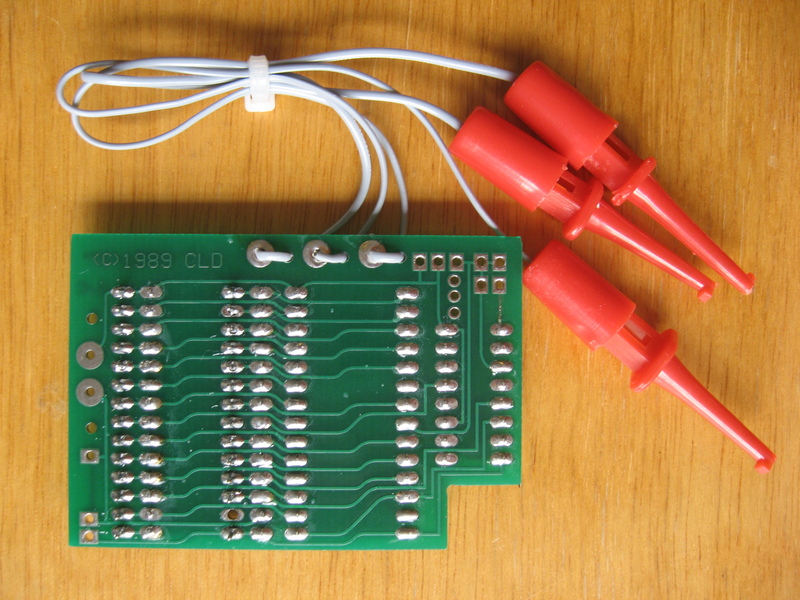
RAMBOard 1541 RAM expansion
The RAMBOard was sold by Software Support International, and was
used in conjunction with special software to achieve full-track GCR
disk copies on a Commodore 5 1/4" floppy drive. It added 8K of RAM to
the system board to make this possible. These photos are of a 1541-II
with the drive mechanism removed for visibility.
Here is a PDF
of the instructions for this unit. They've been restored from scans of
my originals by Wolfgang Moser ("Womo"), who has an
excellent web page covering
this piece in exhaustive detail (even including reverse-engineered
schematics).
And here is a D64 image of the utility
disk that came with.
In early 2008, I bought 1541-II RAMBOards from two different
sellers who had them up for auction on eBay, sold as
originals. However, that's almost certainly not the case; one of the
sellers confirms that he got the board from someone known to fabricate
"original" items. Of course, it begs the question "Why go to all the
trouble of reproducing something like the RAMBOard for what must be an
extremely limited market... and then have someone else sell them?" And
what about the mysterious emails I received in January 2009,
purportedly from someone very close to CLD (the original RAMBOard
manufacturer), explaining in great detail why he thinks the boards are
authentic? Was the copy so good that the sender mistook it for an
original (after all, he may not have seen one in many years)? Was the
sender an impostor (the mails arrived just before a fresh batch of the
boards appeared on eBay)? And what about the story I heard that this
mysterious person has appeared at some Commodore meetings in recent
years with NOS items for sale? What does it all mean?
Here are some photos of the items (click for larger images):
TurboMaster / Master Adapter
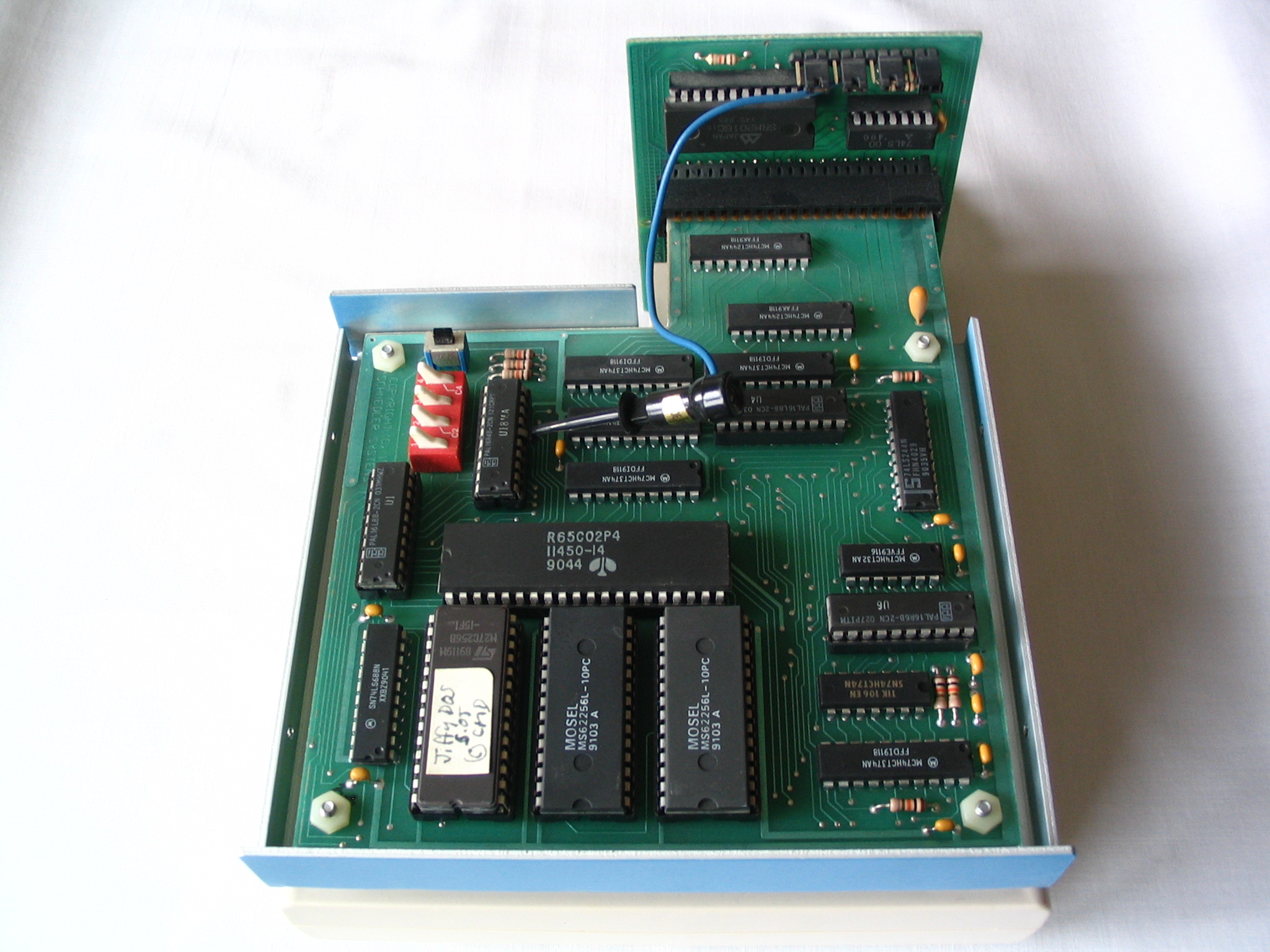
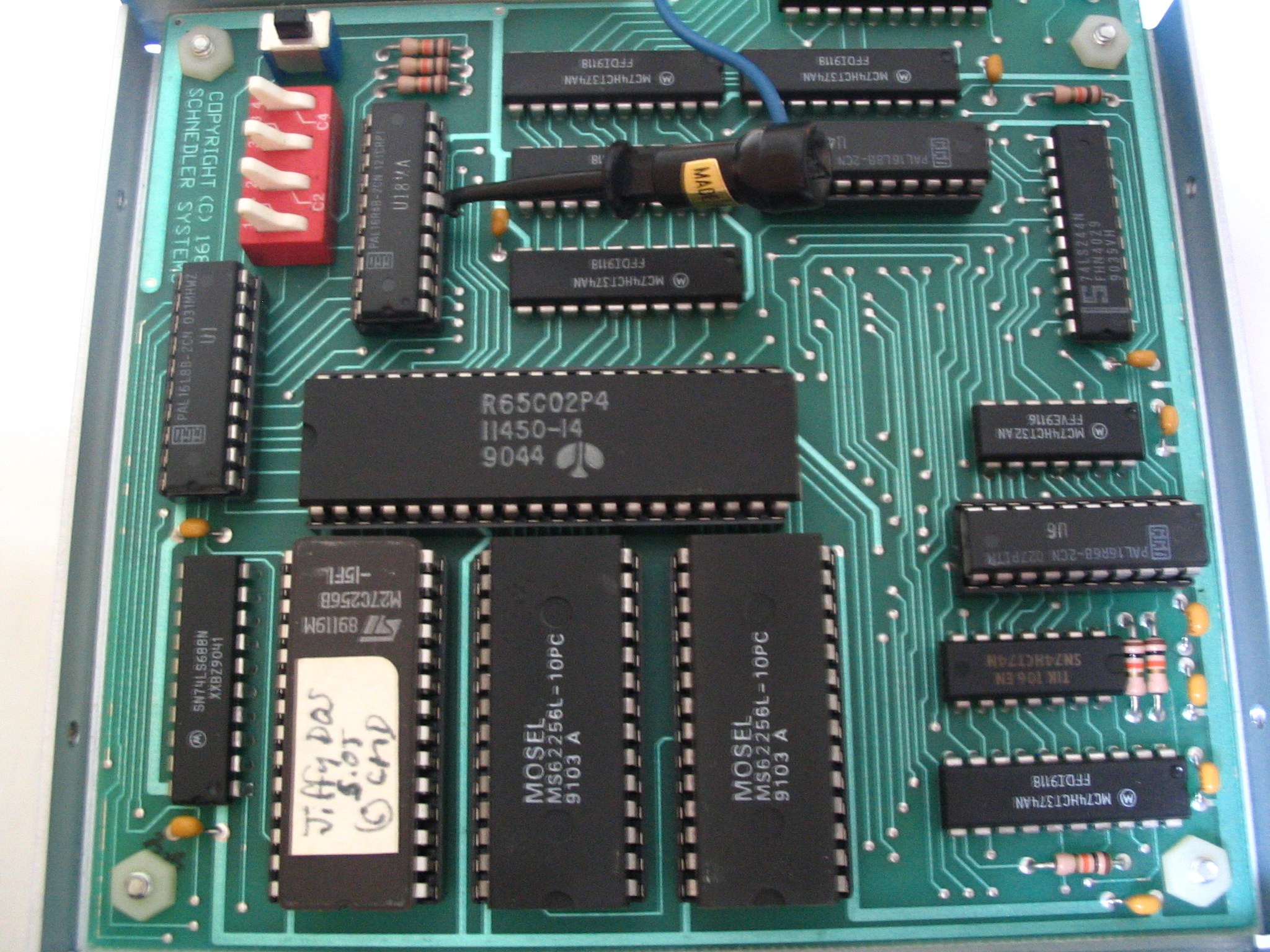
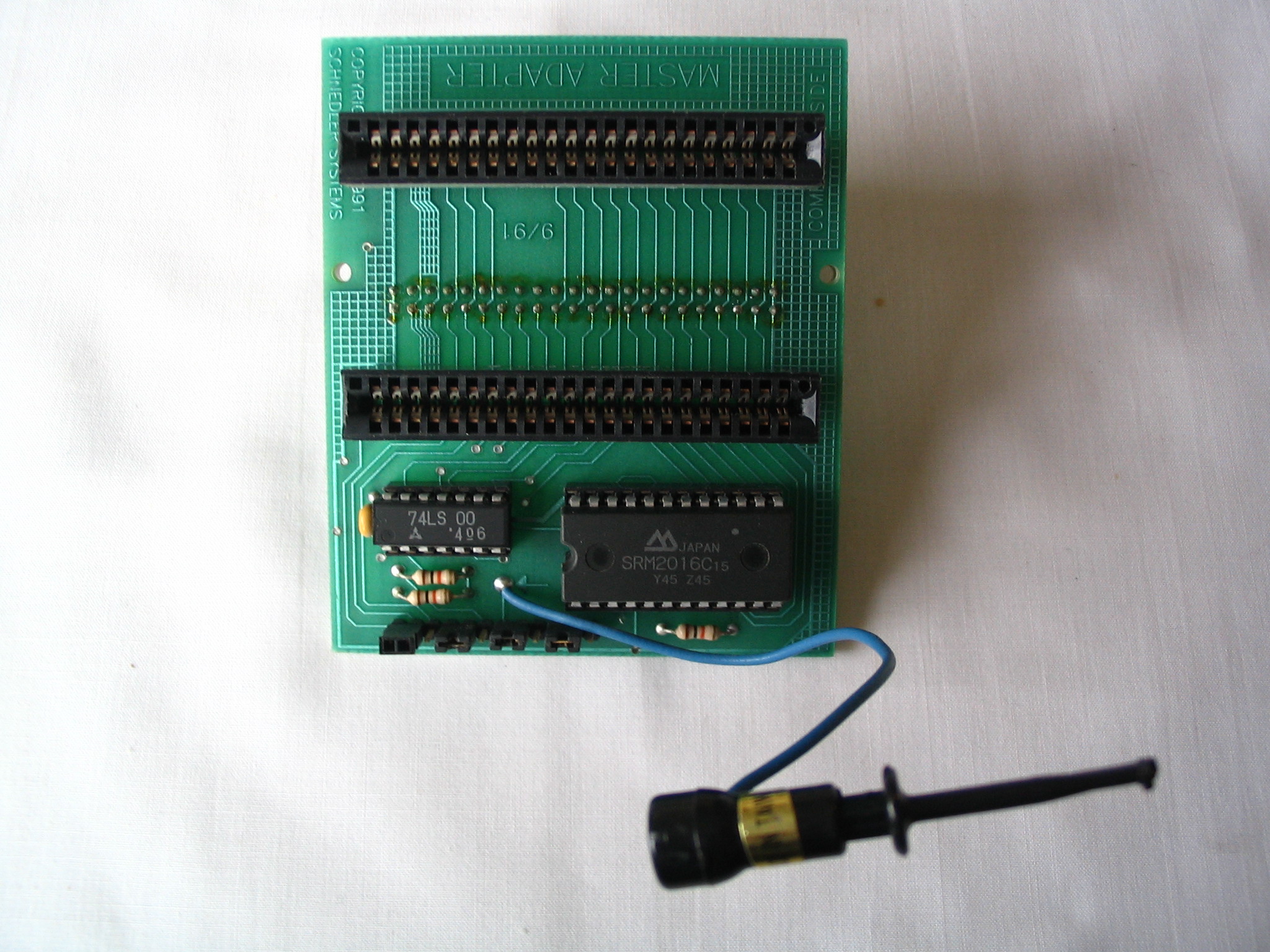
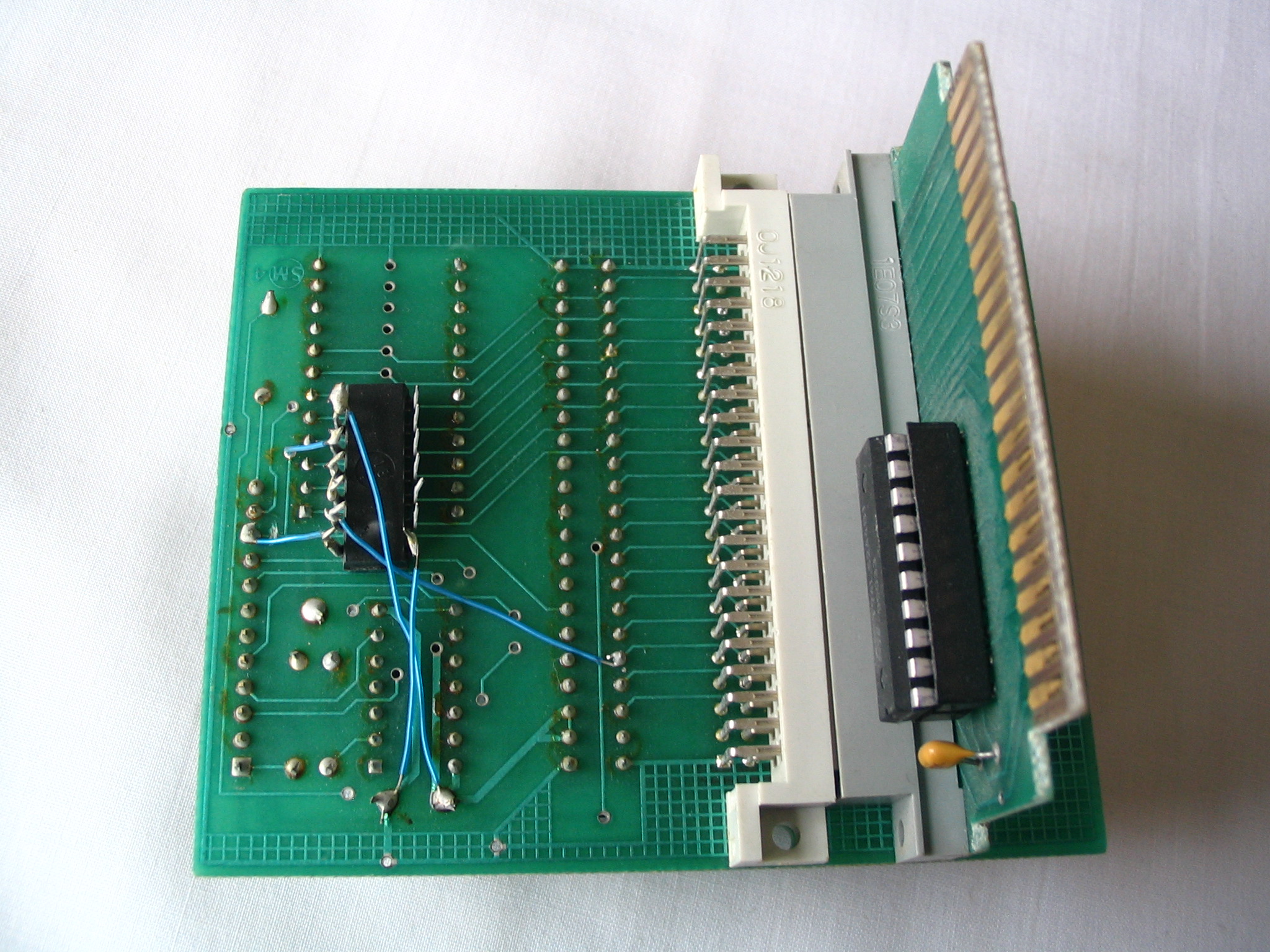
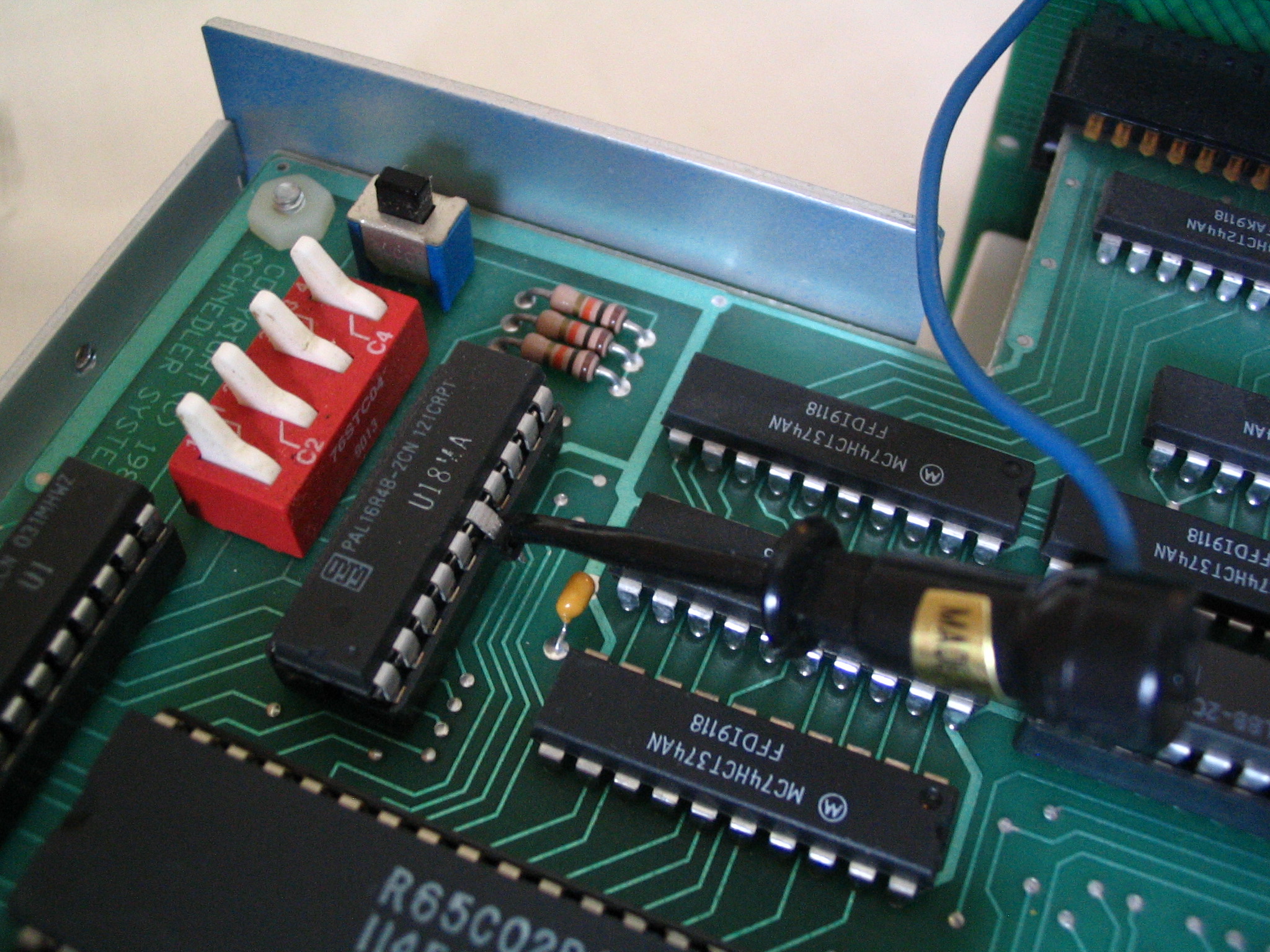
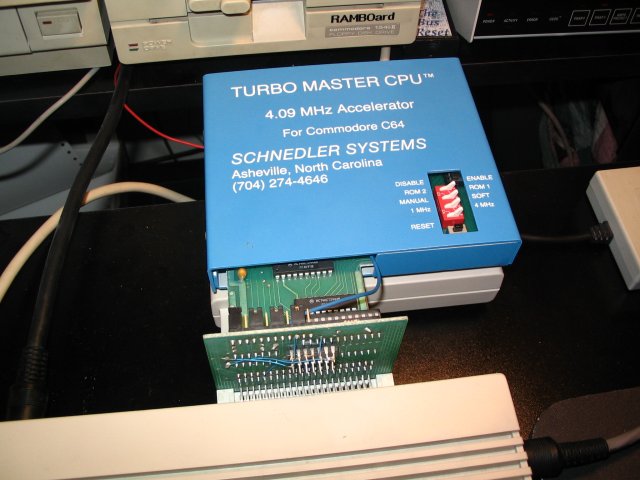
The TurboMaster (made by Schnedler Systems) provides a 65C02
processor to let the machine run at 4 MHz. (The ROM1 / ROM2
switch selects one of two patched ROMs: the "standard" ROM or a
modified JiffyDOS 5.0 ROM.) It and the REU beneath it are plugged into
the Master Adapter, a device meant to allow the two to coexist when
running GEOS. Although plagued by problems that resulted in
spectacular operating system crashes (I still have many of the Q-Link
forum messages), the device was eventually made to work due to the
programming skills of Paul Bosacki, who insisted that the driver's
source code be included in the distribution. Thank you, Paul, wherever
you are; I've whiled away many a pleasant hour studying that code!
Here's a PDF scan of
the TurboMaster manual,
and here's a D64 image of the utility
disk that shipped with (02/18/1992 version, Master Adapter GEOS
REU patches included). This is a GEOS-formatted disk, but has standard
C= files on as well.
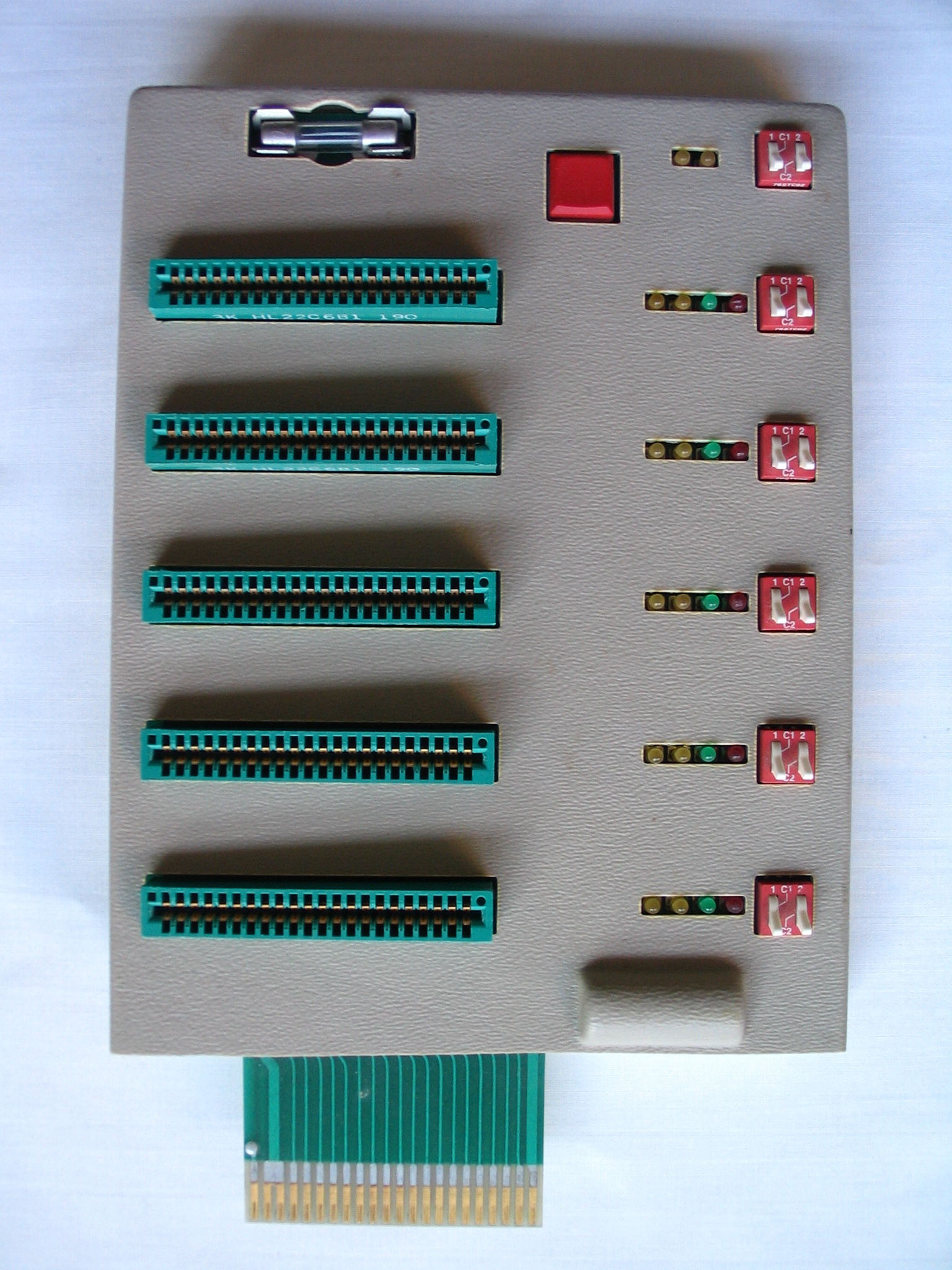
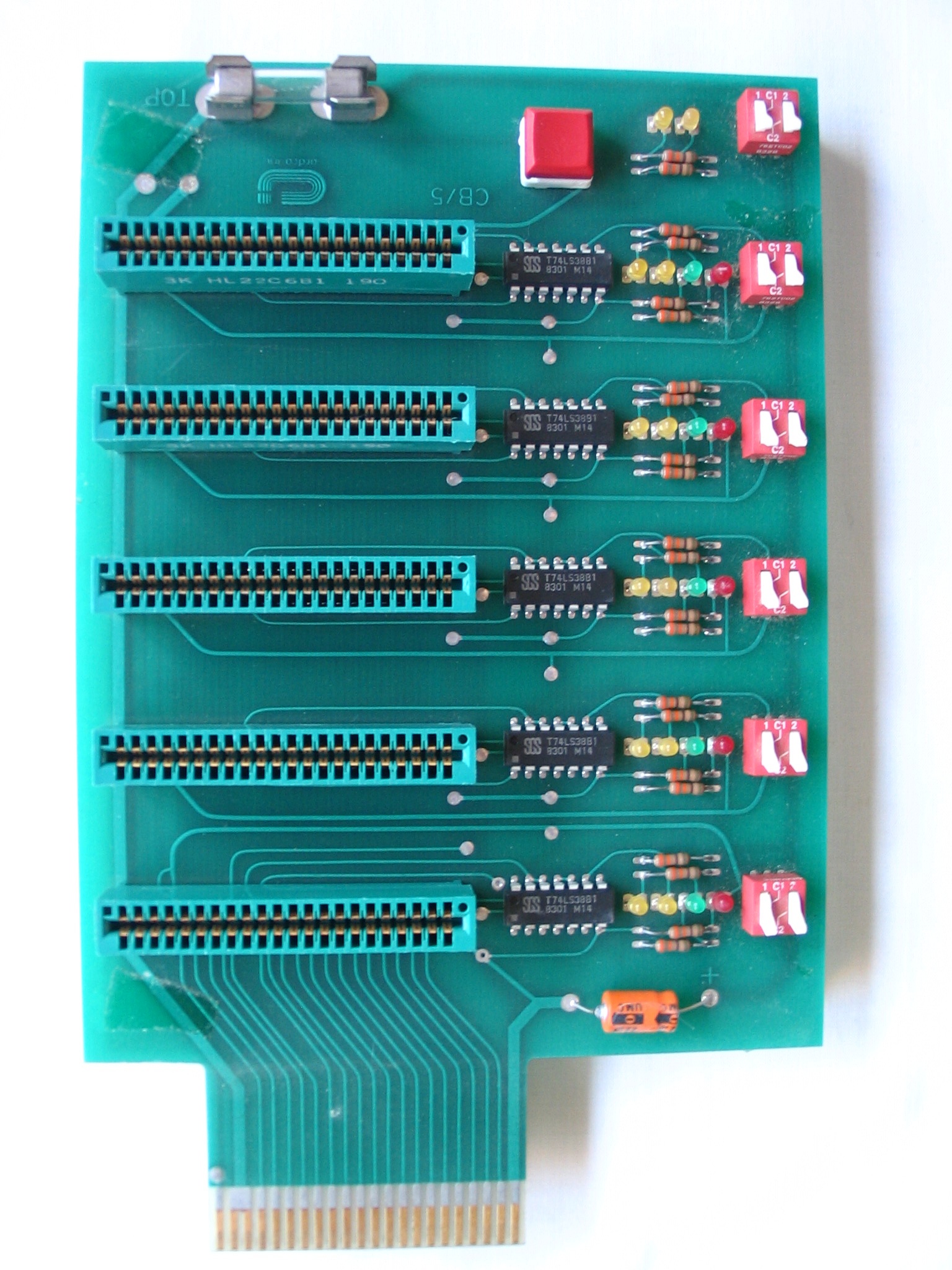
CARDBOARD/5 (CB/5) cartridge port expander
I saw one of these sticking out of Leif Bloomquist's machine at
SWRAP 2004, and I knew I had to have one; the design is straight out
of first-generation Star Trek! I found the advertising blurb on the
'net, but I don't remember where.
DLH has scanned the docs. The
diagram with the switch settings is on page 8.
The CSM Program
Protection Manual (vol. II) also explains how to use the CB/5 and
its toggle switches to make cartridge dumps (starting on page 161).
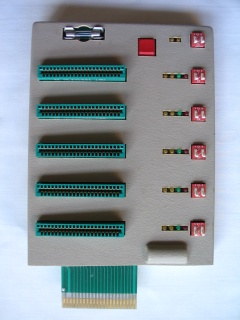
|
Five Slot Expansion Interface for the C-64
The CARDBOARD/5 (CB/5) is an enclosed five slot, fully switch
selectable, expansion interface for the Commodore 64. The
quality product allows the user to switch select any cartridge
slot or combination of cartridge slots. There are twenty-two
color coded light emitting diodes to give the status
indication. Each slot has for LEDs and two toggle weitches for
indication and control. The two amber LEDs indicate the status
(or or off) that the cartridge in that slot is requesting on the
EXROM and GAMEROM lines. If the user wishes to honor this
request, then one of the toggle switches must be turned on. This
will light the green LED showing that the request is being
honored. The two master status amber LEDs at the rear of the
board will show the cumulative status on all slots selected. The
second toggle switch at each slot enables power to the cartridge
and the fourth (red) LED indicates power on condition. This
allows the user supply power to a cartridge without allowing to
auto-start or otherwise affect other operations. Additionally,
there are two master toggle switches that allow the user to
manually override any situation and set the lines as
desired. The CARDBOARD/5 is fully fused and a reset button is
provided.
Some of the feature of the CARDBOARD/5 are:
- high quality glass/epoxy circuit board
- gold plated contacts
- logic lines are switched by solid state IC switches
- full LED status indication
- convenient toggle switches
- full support under the board to prevent flexing
- full plastic enclosure to ensure safety
- fused to protect your computer
- convenient reset button
|
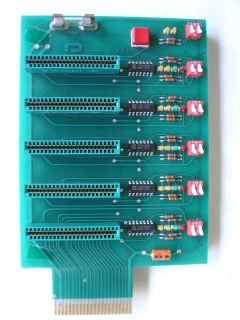
|
Indus GT floppy drive
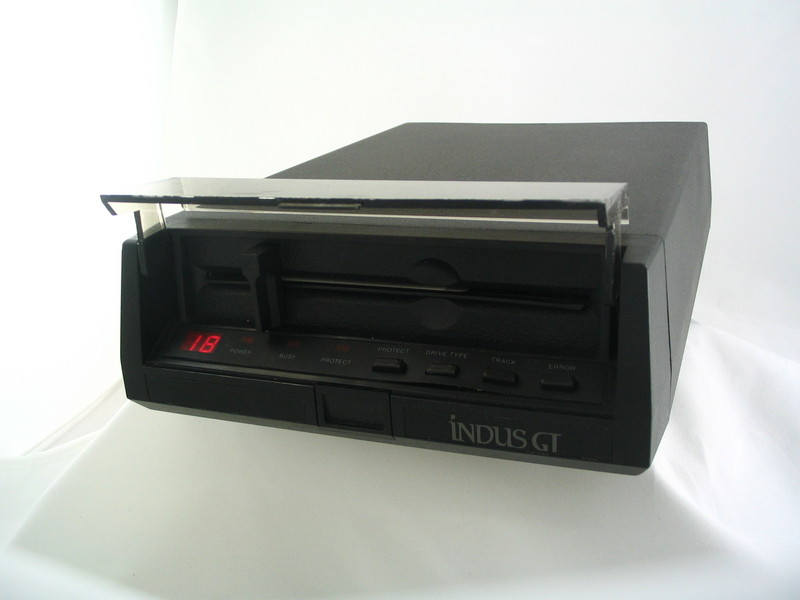
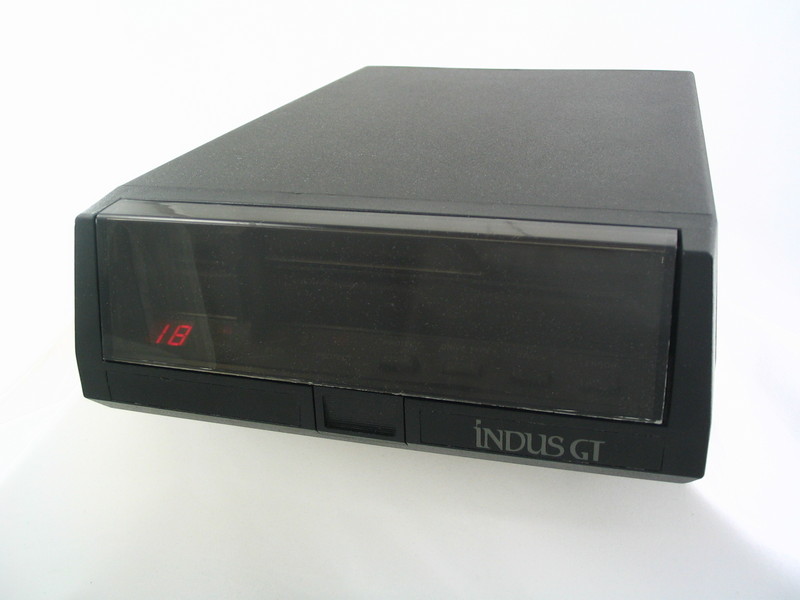
The Indus GT was made for Atari, Apple, and Commodore
computers. Their over-the-top advertising proclaimed "What you get if
you cross a Commodore 64 with a Ferrari... Most of all, you get
luxury. From the sleek lines of its soundproofed chassis to the
responsive AccuTouch™ controls at the Indus
CommandPost™. From the LED display that keeps you in control of
your Commodore to the air-piston operated dust cover that protects
your disks and drive..." Flashy ad copy aside, the drive (which was advertised as 400% faster than Commodore's) is both beautiful and functional. Some of its more interesting features include:
- front panel LED display can show track number, error code, or
device number; device number can be "soft-wired" from panel
- the drive spins up as soon as you insert a diskette (to insure
more accurate positioning when the handle is locked)
- there is an internal "ROM drive" with utility commands on it
that can be addressed as drive 1:
It truly is a Ferrari among floppy drives. Here are a PDF scan of
the manual (33MB) and a D64 image of
its utility disk.
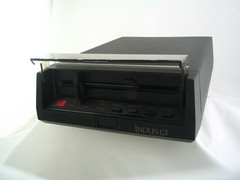
Front view showing LED display.
|
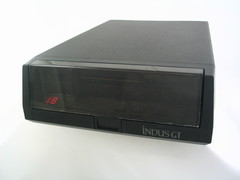
With the "built-in smoked plexiglass dust cover" closed.
|
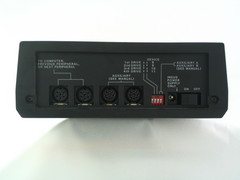
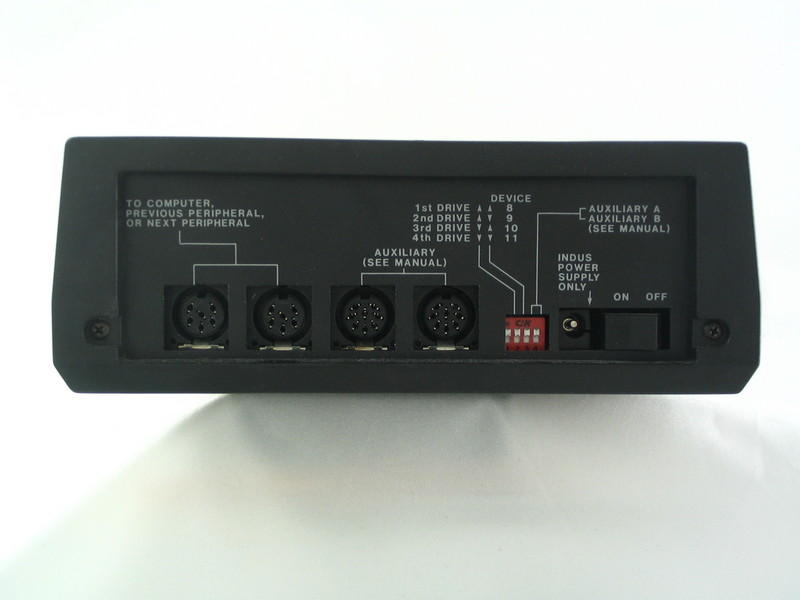
Rear view. The auxiliary ports were not implemented.
|
Excelerator Plus floppy drive
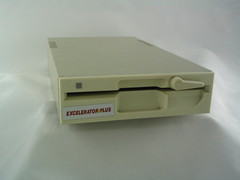 |
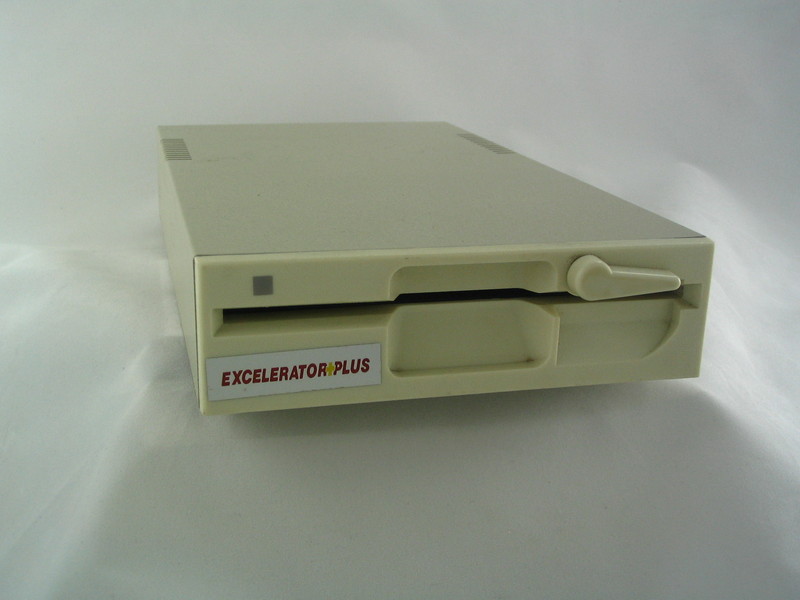
The Excelerator Plus is a very compatible drive in a
small form factor, although it's surprisingly heavy. This one has
been kitted out with JiffyDOS (there's a toggle switch on the
back). Joe Palumbo (JPPBM)
still sells these. |
Enhancer 2000 floppy drive
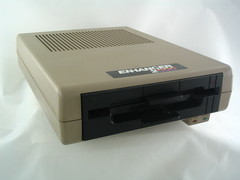 |
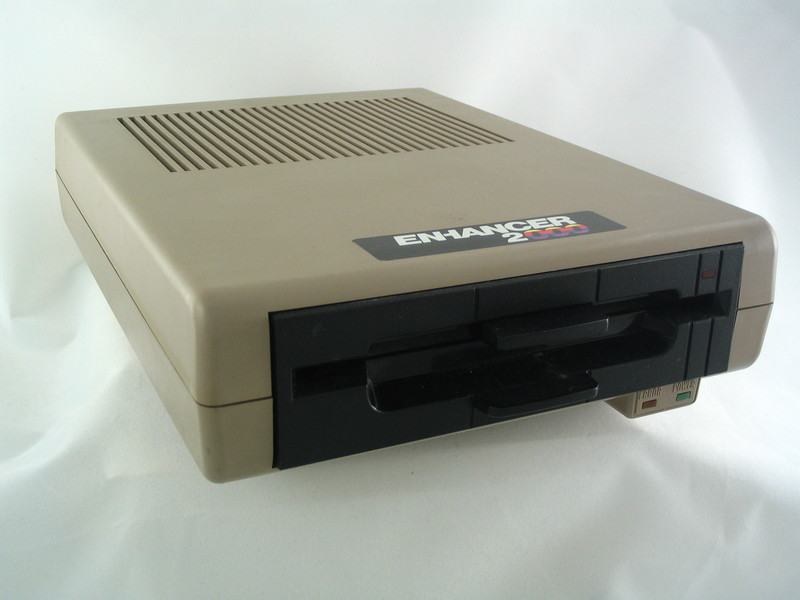
The Enhancer 2000 is a nice drive, but not entirely
compatible (fast loaders tend to fail). |
back to main Commodore page
|